


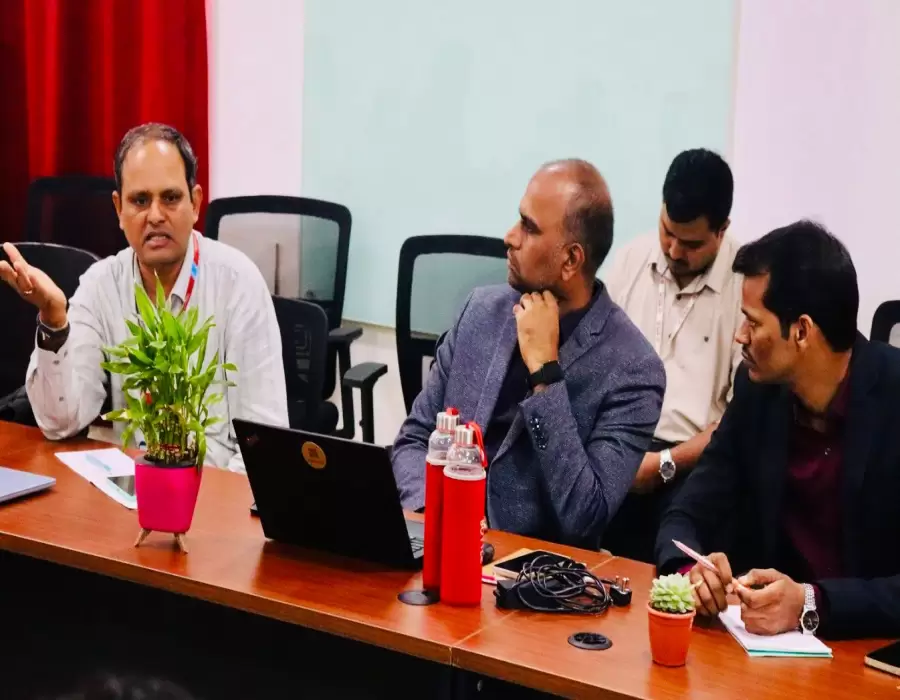
AP Incubators’ CEOs, CXOs & Ecosystem Leaders Meeting hosted at KL University
About
I had the opportunity to attend the AP Incubators’ CEOs, CXOs & Ecosystem Leaders Meeting hosted at KL University. It was encouraging to see 15+ incubation institutions from across Andhra Pradesh come together with a shared intent — strengthening the startup ecosystem through collaboration, not silos. The session began with a whiteboard-style working workshop, where we collectively listed the real challenges faced by incubators and startups on the ground — governance gaps, early-stage founder readiness, sector depth, investor access, and sustainability of incubation models. From there, the discussion naturally evolved into solutions and opportunities, drawing from the on-ground experience of established incubators such as KL Incubation Foundation, AIC-SKU, AH Hub, RTIH-AP, and several other ecosystem partners. Each incubator brought in proven practices, lessons learned, and scalable models that can benefit the larger state ecosystem. What stood out was the maturity of the conversation — moving beyond individual success stories to joint action points, including: • Deeper institution–incubator collaboration • Shared mentor and investor networks • Co-created programs for student founders and rural innovators • Stronger alignment with state and national initiatives These are early but important steps towards a collaborative incubation framework for Andhra Pradesh. When experienced incubators come together, the ecosystem grows faster — and more inclusively. Watch this space for more exciting updates and collaborative initiatives ahead.
Objective
|
I had the opportunity to attend the AP Incubators’ CEOs, CXOs & Ecosystem Leaders Meeting hosted at KL University. It was encouraging to see 15+ incubation institutions from across Andhra Pradesh come together with a shared intent — strengthening the startup ecosystem through collaboration, not silos. The session began with a whiteboard-style working workshop, where we collectively listed the real challenges faced by incubators and startups on the ground — governance gaps, early-stage founder readiness, sector depth, investor access, and sustainability of incubation models. From there, the discussion naturally evolved into solutions and opportunities, drawing from the on-ground experience of established incubators such as KL Incubation Foundation, AIC-SKU, AH Hub, RTIH-AP, and several other ecosystem partners. Each incubator brought in proven practices, lessons learned, and scalable models that can benefit the larger state ecosystem. What stood out was the maturity of the conversation — moving beyond individual success stories to joint action points, including: • Deeper institution–incubator collaboration • Shared mentor and investor networks • Co-created programs for student founders and rural innovators • Stronger alignment with state and national initiatives These are early but
important steps towards a collaborative incubation framework for Andhra
Pradesh. When experienced
incubators come together, the ecosystem grows faster — and more inclusively. Watch this space for more
exciting updates and collaborative initiatives ahead. |
Gallery
OutCome Of the Event
|
I had the opportunity to attend the AP Incubators’ CEOs, CXOs & Ecosystem Leaders Meeting hosted at KL University. It was encouraging to see 15+ incubation institutions from across Andhra Pradesh come together with a shared intent — strengthening the startup ecosystem through collaboration, not silos. The session began with a whiteboard-style working workshop, where we collectively listed the real challenges faced by incubators and startups on the ground — governance gaps, early-stage founder readiness, sector depth, investor access, and sustainability of incubation models. From there, the discussion naturally evolved into solutions and opportunities, drawing from the on-ground experience of established incubators such as KL Incubation Foundation, AIC-SKU, AH Hub, RTIH-AP, and several other ecosystem partners. Each incubator brought in proven practices, lessons learned, and scalable models that can benefit the larger state ecosystem. What stood out was the maturity of the conversation — moving beyond individual success stories to joint action points, including: • Deeper institution–incubator collaboration • Shared mentor and investor networks • Co-created programs for student founders and rural innovators • Stronger alignment with state and national initiatives These are early but
important steps towards a collaborative incubation framework for Andhra
Pradesh. When experienced
incubators come together, the ecosystem grows faster — and more inclusively. Watch this space for more
exciting updates and collaborative initiatives ahead. |